From Training to Action: Women Leaders Driving Early Warning and Community Prevention in Kilifi

Updated: Apr 24

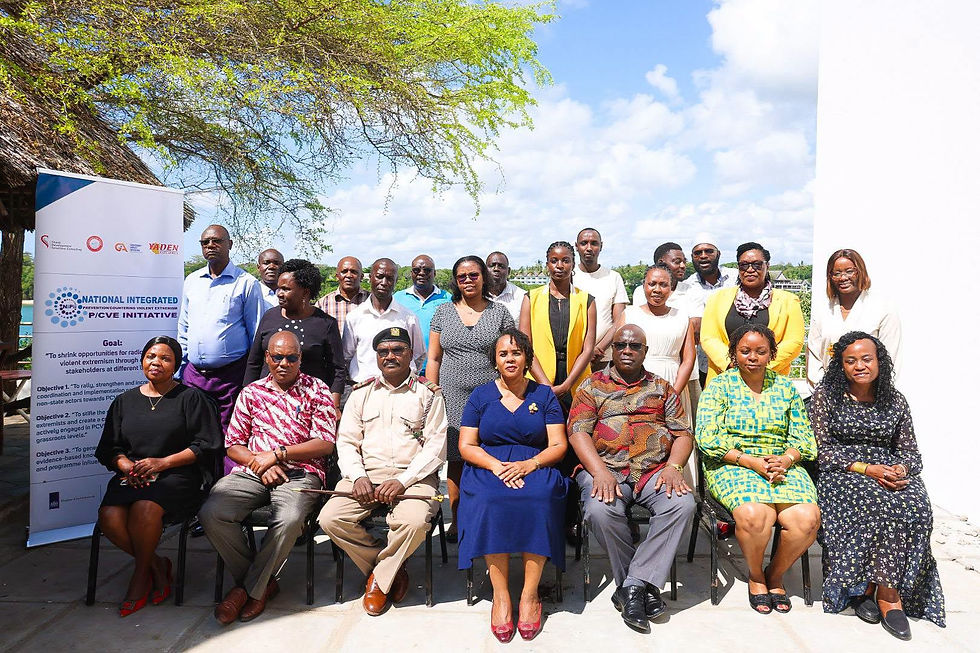
Women leaders from security and justice institutions in Kilifi County recently convened for a one-day, in-person training on Preventing and Countering Violent Extremism, with a strong focus on wellbeing and parenting as critical pillars of prevention. Delivered by mentors under the Mwanamke Imara program, the session emphasized that effective security begins at the household level, where trust, emotional stability, and guidance shape the resilience of families and communities.
The training comes at a critical time. In areas such as Magarini Sub-County, bordering Tana River, communities are navigating layered challenges driven by climate stress and socio-economic pressures. The transition from prolonged drought to sudden rains has left behind unresolved disputes over resources like water and land, particularly in Magarini. These tensions, combined with rising insecurity such as the increase of “panga boys” in Malindi, highlight the urgent need for strong, community-based early warning and prevention systems.
Through the training, participants explored how wellbeing and positive parenting can act as frontline early warning tools. Women, as caregivers and community connectors, are often the first to notice behavioral shifts, emotional distress, and signs of vulnerability among young people. By strengthening their capacity to respond early, the training reinforced their role as critical actors in preventing violence before it escalates.

The Mwanamke Imara program is equipping these women not just with knowledge, but with practical tools for action. Through mentorship, peer learning, and rapid response approaches, the program is enabling women to design and implement community-led interventions that address both immediate risks and long-standing drivers of conflict. It creates a bridge between communities and formal security structures, ensuring responses are timely, inclusive, and locally grounded.
Already, the impact is visible. In both Kilifi and Kwale Conties, women are mobilizing resources, forming support networks, and leading grassroots initiatives to protect vulnerable groups and restore social cohesion. They are leveraging the skills gained through the training to strengthen early warning systems, mediate emerging disputes, and create safer environments for youth and families.
This training marks more than a learning moment, it signals a shift toward women-led prevention and community ownership of peace and security. Through Mwanamke Imara, women are not only strengthening their leadership but also redefining what effective, sustainable PCVE looks like at the local level.


Good work